Risk control
The Occupational Health and Safety Act 2004 (Vic) establishes that 'employees, other persons at work and members of the public must be given the highest level of protection against risks to their health and safety that is reasonably practicable in the circumstances'.
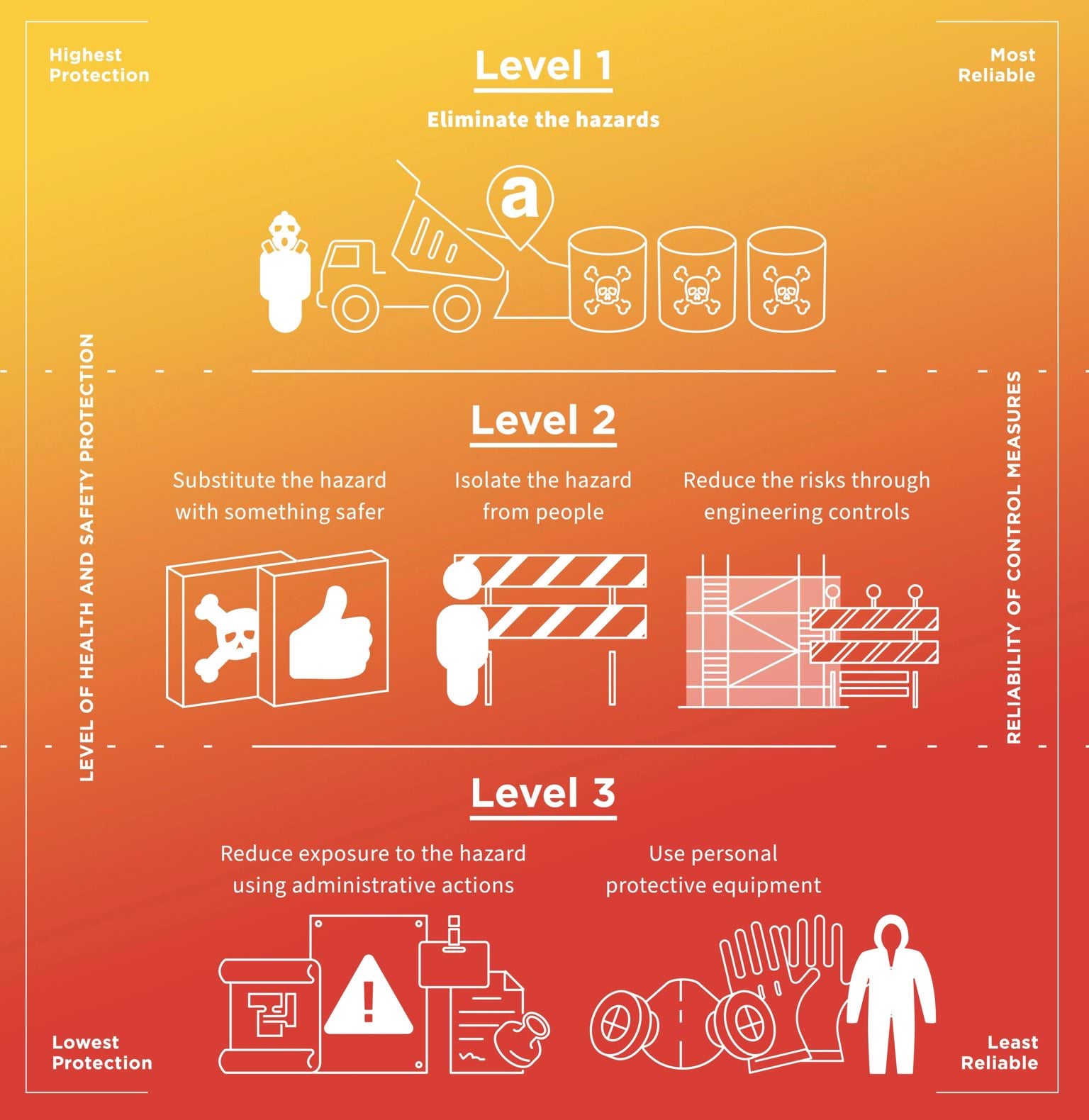
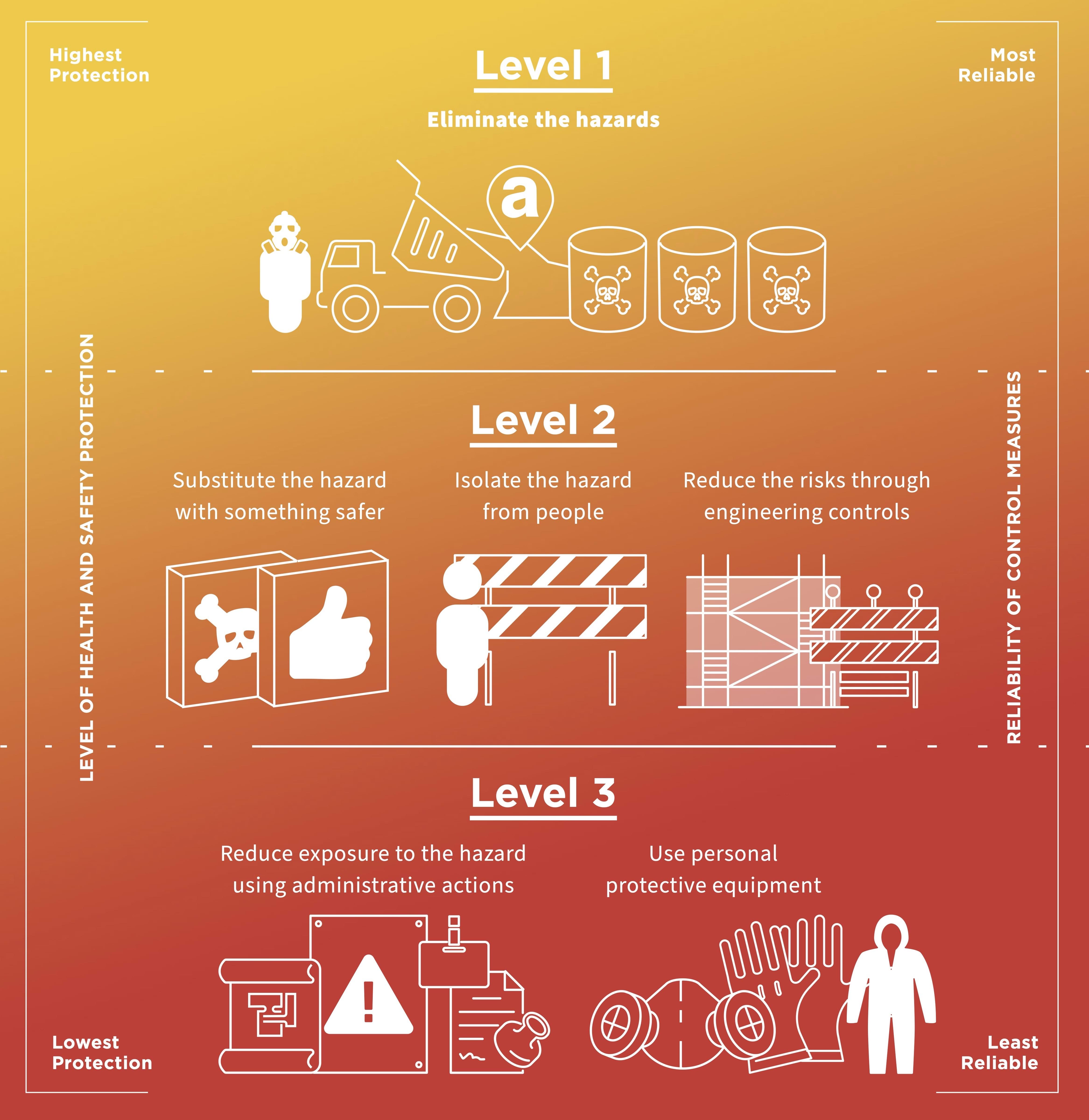
This is achieved by applying the hierarchy of control – a step-by-step approach to eliminating or reducing risks, ranked from most to least effective.
Control hierarchy
1. Elimination
- Remove asbestos entirely – the highest level of protection and the most reliable control
2. Substitution, isolation, engineering controls
- Replace with safer materials
- Isolate people from risks
- Use engineering solutions to reduce exposure
3. Administrative controls
- Maintain asbestos registers and audits
- Use clear signage – labelling and QR codes
4. Personal protective equipment (PPE)
- Respirators, goggles, body suits and protective clothing – the lowest level of protection and the least reliable control
Hierarchy of risk control
Expert advice is clear
Removing asbestos is the most effective way to manage long-term risk, including the risk of asbestos-related disease. Proactive removal reduces exposure, eliminates ongoing maintenance, and increases site value and re-use options.
"The most effective way to manage the long-term risks of exposure to asbestos is via its complete removal."
"While we have asbestos in our built environment, people will continue to inadvertently drill into it, sand it or dismantle it, so I think the less asbestos there is, the more likely we are to be able to control the incidence of [mesothelioma]."
Professor Anna Nowak, National Centre for Asbestos-Related Diseases(opens in a new window), University of Western Australia, from The West Australian, 13 November 2018, “Push for asbestos removal payment”, Phoebe Wearne
Updated